Latest Educational Materials
Monday, August 26, 2024
Saturday, August 24, 2024
Wednesday, August 21, 2024
Tuesday, August 20, 2024
Monday, August 5, 2024
Saturday, June 15, 2024
Thursday, January 20, 2022
specification grid of class 11/12 compulsory English
Compulsory English
ENG. 003 (Grade XI), Eng. 004 (Grade XII)
Test Specification
Chart for External Evaluation Reading (35 marks)
1.
Reading
Comprehension Test (15 marks)
One unseen prose text of about 600 words like; book/film reviews, news reports, and articles, stories, reports, letters or emails, essays, biographies/auto-biographies, product guides, blogs, brochures, travelogues/memoire, etc. followed by comprehension questions targeting the testing of the following skills involved in reading, will be given together with the comprehension questions:
understanding general content of paragraphs or sections
· identifying and understanding specific information in the passage
· scanning and understanding information
· understanding the opinions of the writer
· understanding words in context
· identifying aims of a passage=
· understanding details and order of information
a. Number of test items: 15
b. Types of test items: any three of: Multiple Choice, True/False/Not Given, Sentence Completion, Matching, Ordering, Summary Completion and Short Answer Questions. One type of question should test the vocabulary in context.
c. The questions should have the mixture of different types of comprehension: literal comprehension, reorganization, inference and evaluation.
2. Text Based Questions (20 marks) This section contains seven text based
questions from literature section. This follows the following chart:
|
Genres |
Types
of Questions |
|
|
Short stories |
Short questions |
Long Questions |
|
Poems |
5 |
2 |
|
Essays |
||
|
One act plays |
||
|
Total |
Short Answer Questions = 5×2 = 10 Long Answer Questions = 2×5 = 10 |
|
Short and long answer questions should cover the following skills:
a. comprehending b. narrating c. summarizing d. writing character sketch e. paraphrasing f. writing theme/central idea of the text g. comparing and contrasting h. making judgment (e.g. title justification) i. arguing j. analysing and interpreting k. explaining with reference to context l. literary interpretation m. critical appreciation
Writing (25 marks) Three writing tasks will be given:
1.
Task
1 (7 marks) Any one of:
paragraph writing, summary writing, interpreting graphic text, news story writing, note taking, and skeleton stories. Word limit: 150 words.
2.
Task
2 (8 marks) Any one of:
personal letter, job application letter, letter to the editor, business letter, emails, writing a CV. Word limit: 180 words.
3.
Task
3 (10 marks) Any one of:
essay, travelogue/memoir, book/film review, biography, diary entry, communique and press release. Word limit: 300 words.
Grammar and
vocabulary (15 marks)
1. Grammar (10×1=10 marks) The test item on grammar will cover the following contents.
a. Adjectives and adverbs
b. Concord/subject verb agreement
c. Prepositions
d. Modal auxiliaries
e. Tense and aspect
f. Infinitives and gerunds
g. Conjunctions
h. Relative clause
i. Voice
j. Reported speech
2. Vocabulary: (5x1=
5 marks) This section covers the following contents.
a. Sound system of English: consonants and vowels
b. Vocabulary study - Stem/root - Suffixes - Prefixes - Derivation - Inflexion - Synonyms/antonyms - Parts of speech - Idioms and phrases - Nouns-number - Verb conjugation - Spelling - Punctuation
c. Dictionary use
d. Idioms and phrasal verbs
(Note: Sound System of English will be tested in grade 12 only)
The EndTuesday, January 11, 2022
If I should Die, by Emily Dickinson, poem summary
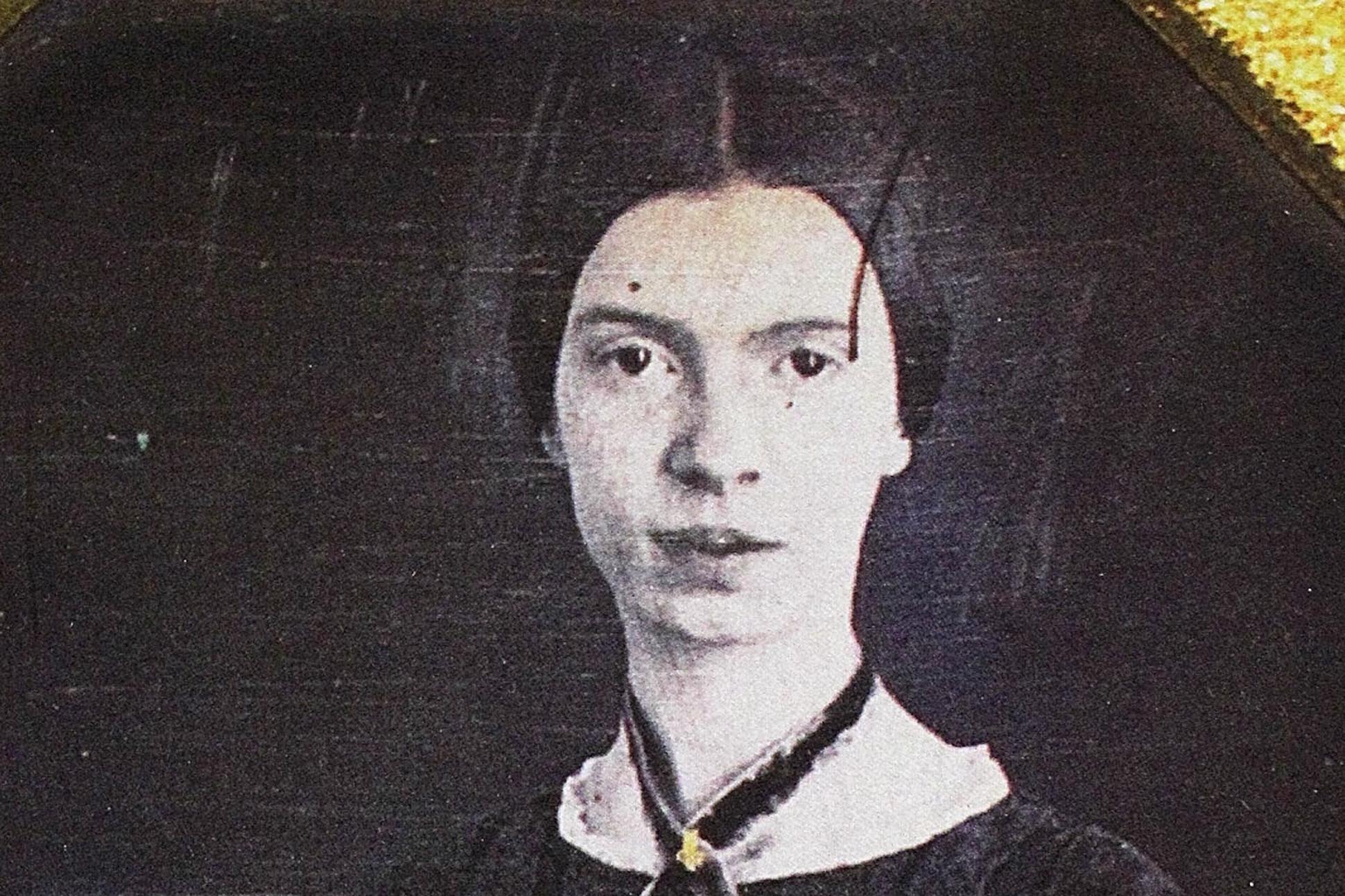
If I should Die
Emily Dickinson
Emily Dickinson is one of the greatest American poets and a death-obsessed writer. Her poems exemplified the truth and hidden humor about death. This famous poem 'If I should Die' contrasts death with the life of the survivors. This poem consists of two parts regarding the circle of life: the first part reveals the natural aspect of life as a very peaceful part, and the second part is portrayed as the human death, and thirdly it is referring to the happiness in another world after the death.
In the poem, the poet Emily Dickenson is relating her poem to one's death and its effect on the other living people. In the beginning part of the poem, she reveals the reality of the world that one should die and another should remain alive. It is the natural process where people are dying every day and others are remaining alive on the earth. The poet takes her own death as a natural process. She tells that her death will not stop the happenings of the world. Time continuously passes on its course. In the morning the sun will rise and in the afternoon the sun becomes hot like burning. These natural events are going on in their natural course even if she is dead. The birds never stop building their nest and the bees never stop humming.
One might depart from the world of living people but survivor has to do their daily activities to survive in this world. People have to run their businesses; they have to continue their commerce and trades. She wishes to see the progress and success in their life. The business should progress as briskly fly. The remaining people could get progress in their business or work. Here the business may also refer to the daily activities of the common people. She becomes happy when she knows that the business is getting progress. This progress gives happiness to the people who are dead and lying in the grave with daisies. Daisies are symbolically signified in the poem because daisies are placed on the graves of loved ones. These daisies referred to death. By looking at the progress and busy lifestyle of the people the soul of departed people take rest in tranquility. When the people forget about the death of the dead one and work on their duty sprightly, it gives a pleasing scene to the speaker.
She takes death as
a part of life and does not feel sad about her own death. The existence of each
thing in nature has to vanish one day. Moreover, she believes that death is not
the end; it is the beginning of something new and exciting journey. The
second part of her poem deals with another aspect of death and dying. She says
after her death all the commerce and trade will continue and people will
prosper more. No one and nothing on the earth will worry about her death and will not
be adversely affected. At this point, Dickinson is not worried rather she is
feeling calm and that even after her death the circle of life is naturally
going on. Dickinson takes her death as a normal thing to occur. Her obsession
with death is clearly seen in the poem. Her easy and positive approach to
death in this poem reflects her spirituality and defines her as a metaphysical
poet. She supports the idea that death should no longer be something that one
fears because everything has to die to be something new again and to continue
the circle of life.
Monday, January 10, 2022
Every Morning I Wake by Dylan Thomas class 12, summary
 Every morning I wake
Dylan Thomas
Dylan Thomas was born in Wales (1914 to 1953). He was famous for his lyrical and emotional poetry. He is largely known for his imaginative use of language and vivid imagery in his poems. He started working for BBC in 1945 and made radio plays under Milk Wood. "Every Morning I Wake" is an extract from "under the Milk Wood". in the poem, he prayed to the magnificent god to have mercy on ordinary inhabitants living under the Milk Wood.
Every morning the writer wakes up and prays to God for mercy upon the people of Milk Wood and the people of the world. He requested the god to give the little eyes to the prayers. All the poor creatures who are born must have to die one day. He not only prays to god for personal protection but also for all innocent creatures in the world. Similarly, every evening the poet prays to God to give the blessing on the town. He is unsure if the night is the last night of city inhabitants or not, but he always prays the almighty will make everything good and protect them from any possible harm. Our life is uncertain. The speaker expresses the uncertainty of life and death. The speaker prays to God before going to bed, but he doesn't know whether he'll see them again in the morning, so he asks for God to bless them. Every night's benefits from God enable us to see them the next day. In this world, neither people are wholly good nor bad. The people who are living in Milk Wood might good or bad. Only God could judge the good and worse activities of the people. He praises the god who only could see right and wrong, the good and bad nature of the people. God doesn't show any prejudice towards the people of the world. The poets' praying is not ended he would pray each day –morning, day, night, and next day. The speaker kneels before God, pleading for him to preserve them alive till morning. People might judge them in their own way it all depends on someone's perspective on how s/he judges others. But the speaker seems optimistic that God knows the best side of the inhabitants of milk Wood. Speaker prays that the night will be down soon and the delighting sun will re-appear. The night is used as the imagery in this poem. It points to the pains, stress, and sad days of the inhabitants of the town or the speaker himself. And he hopes for Almighty's help in their bad days. Last Good Bye, for now, represents the ending of a prayer. One day may come we have to say goodbye to the world and may live in another world after our death.
Sunday, January 9, 2022
She Dwelt among the Untrodden Ways, by William Wordsworth
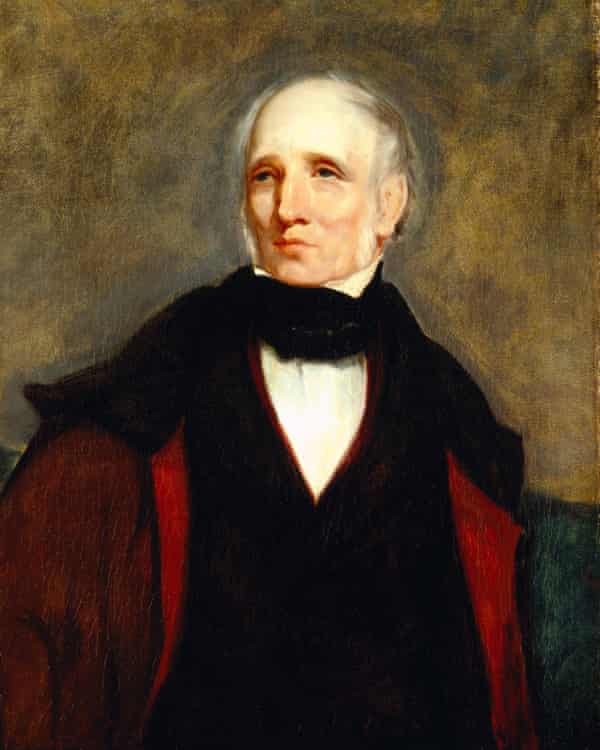
She Dwelt
among the Untrodden Ways
William Wordsworth
William words worth was a major English Romantic poet who has contributed to Romanticism in English literature. 'She Dwelt among the Untrodden Ways' was written in 1798. This poem is Wordsworth’s best-known work from a series of five texts that form his “Lucy” series. In this series, Wordsworth examines an idealized and unrequited love for Lucy, a girl who has died young. 'She Dwelt among the Untrodden Ways' is written about the death of his beloved whose name was 'Lucy'. In the poem, he has expressed his mourning tone as an elegy.
In the poem, the poet describes a graveyard where an amid is kept. She is buried in an area where people rarely stepped in i.e untrodden area beside the Dove River. It is kept beside the springs of the Dove River. There is nobody praising her beauty and virtue in the world. There may be very few or none to love and respect her. Above her grave, there are grown violets and mossy on the stone which is half-hidden. She is really like a shining star in the sky. It is unknown to that entire where has buried, only a few understand about the death of Lucy. She is in the grave. Her death makes difference in the life of the poet.
In the poem, a village girl Lucy had died. She was not popular and liked or loved by many people. But she was like the shingling star for the poet. She was the only lady to whom the poet used to love. Her death makes a great difference in the poet's life. From the final part of the poem, we understand the theme of the poem. So the poem tries to present the mourning tone of sadness in the poem, towards the death of a girl.