Latest Educational Materials
Wednesday, June 26, 2024
Saturday, June 15, 2024
Thursday, January 20, 2022
specification grid of class 11/12 compulsory English
Compulsory English
ENG. 003 (Grade XI), Eng. 004 (Grade XII)
Test Specification
Chart for External Evaluation Reading (35 marks)
1.
Reading
Comprehension Test (15 marks)
One unseen prose text of about 600 words like; book/film reviews, news reports, and articles, stories, reports, letters or emails, essays, biographies/auto-biographies, product guides, blogs, brochures, travelogues/memoire, etc. followed by comprehension questions targeting the testing of the following skills involved in reading, will be given together with the comprehension questions:
understanding general content of paragraphs or sections
· identifying and understanding specific information in the passage
· scanning and understanding information
· understanding the opinions of the writer
· understanding words in context
· identifying aims of a passage=
· understanding details and order of information
a. Number of test items: 15
b. Types of test items: any three of: Multiple Choice, True/False/Not Given, Sentence Completion, Matching, Ordering, Summary Completion and Short Answer Questions. One type of question should test the vocabulary in context.
c. The questions should have the mixture of different types of comprehension: literal comprehension, reorganization, inference and evaluation.
2. Text Based Questions (20 marks) This section contains seven text based
questions from literature section. This follows the following chart:
|
Genres |
Types
of Questions |
|
|
Short stories |
Short questions |
Long Questions |
|
Poems |
5 |
2 |
|
Essays |
||
|
One act plays |
||
|
Total |
Short Answer Questions = 5×2 = 10 Long Answer Questions = 2×5 = 10 |
|
Short and long answer questions should cover the following skills:
a. comprehending b. narrating c. summarizing d. writing character sketch e. paraphrasing f. writing theme/central idea of the text g. comparing and contrasting h. making judgment (e.g. title justification) i. arguing j. analysing and interpreting k. explaining with reference to context l. literary interpretation m. critical appreciation
Writing (25 marks) Three writing tasks will be given:
1.
Task
1 (7 marks) Any one of:
paragraph writing, summary writing, interpreting graphic text, news story writing, note taking, and skeleton stories. Word limit: 150 words.
2.
Task
2 (8 marks) Any one of:
personal letter, job application letter, letter to the editor, business letter, emails, writing a CV. Word limit: 180 words.
3.
Task
3 (10 marks) Any one of:
essay, travelogue/memoir, book/film review, biography, diary entry, communique and press release. Word limit: 300 words.
Grammar and
vocabulary (15 marks)
1. Grammar (10×1=10 marks) The test item on grammar will cover the following contents.
a. Adjectives and adverbs
b. Concord/subject verb agreement
c. Prepositions
d. Modal auxiliaries
e. Tense and aspect
f. Infinitives and gerunds
g. Conjunctions
h. Relative clause
i. Voice
j. Reported speech
2. Vocabulary: (5x1=
5 marks) This section covers the following contents.
a. Sound system of English: consonants and vowels
b. Vocabulary study - Stem/root - Suffixes - Prefixes - Derivation - Inflexion - Synonyms/antonyms - Parts of speech - Idioms and phrases - Nouns-number - Verb conjugation - Spelling - Punctuation
c. Dictionary use
d. Idioms and phrasal verbs
(Note: Sound System of English will be tested in grade 12 only)
The EndTuesday, January 11, 2022
If I should Die, by Emily Dickinson, poem summary
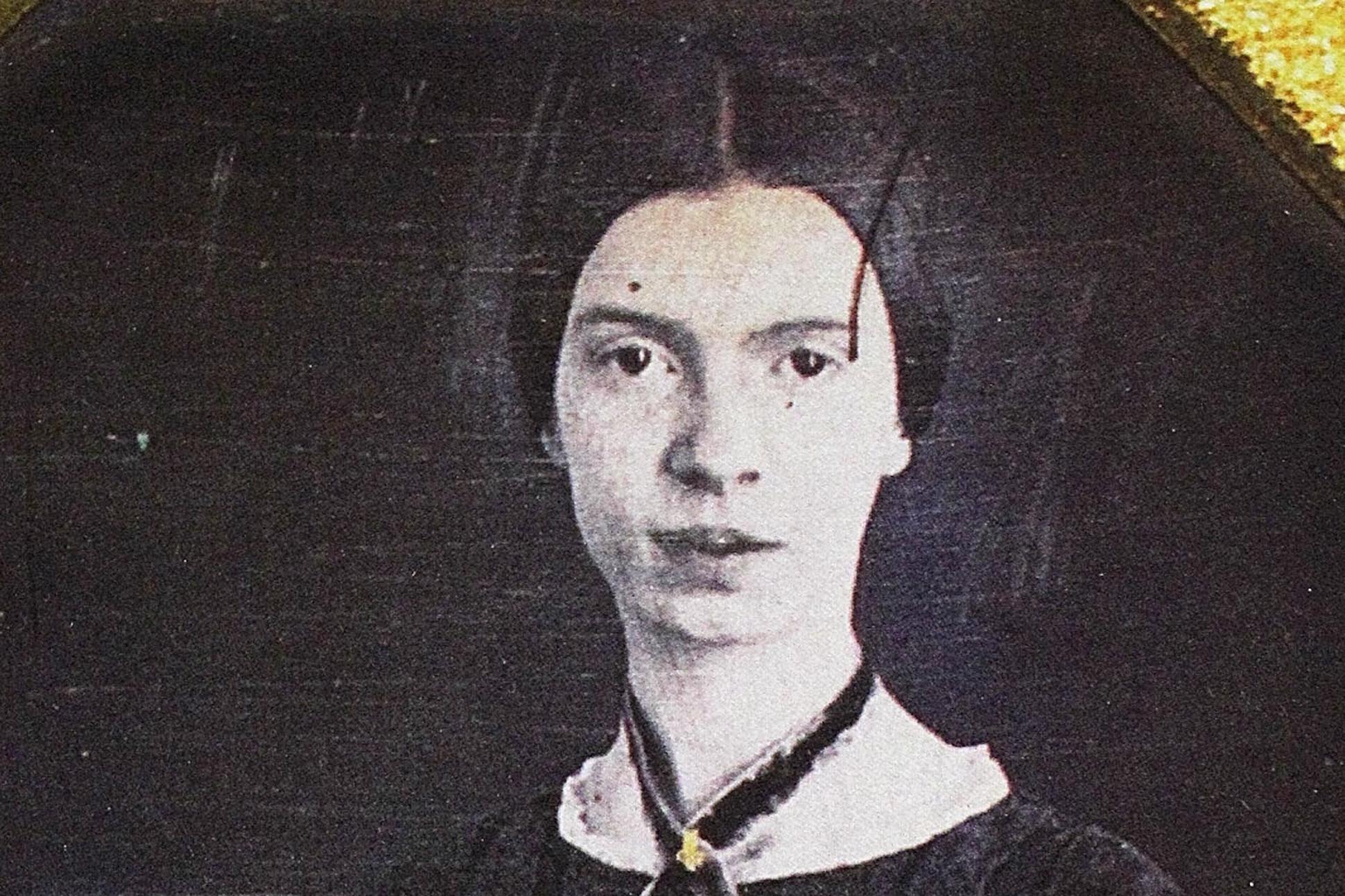
If I should Die
Emily Dickinson
Emily Dickinson is one of the greatest American poets and a death-obsessed writer. Her poems exemplified the truth and hidden humor about death. This famous poem 'If I should Die' contrasts death with the life of the survivors. This poem consists of two parts regarding the circle of life: the first part reveals the natural aspect of life as a very peaceful part, and the second part is portrayed as the human death, and thirdly it is referring to the happiness in another world after the death.
In the poem, the poet Emily Dickenson is relating her poem to one's death and its effect on the other living people. In the beginning part of the poem, she reveals the reality of the world that one should die and another should remain alive. It is the natural process where people are dying every day and others are remaining alive on the earth. The poet takes her own death as a natural process. She tells that her death will not stop the happenings of the world. Time continuously passes on its course. In the morning the sun will rise and in the afternoon the sun becomes hot like burning. These natural events are going on in their natural course even if she is dead. The birds never stop building their nest and the bees never stop humming.
One might depart from the world of living people but survivor has to do their daily activities to survive in this world. People have to run their businesses; they have to continue their commerce and trades. She wishes to see the progress and success in their life. The business should progress as briskly fly. The remaining people could get progress in their business or work. Here the business may also refer to the daily activities of the common people. She becomes happy when she knows that the business is getting progress. This progress gives happiness to the people who are dead and lying in the grave with daisies. Daisies are symbolically signified in the poem because daisies are placed on the graves of loved ones. These daisies referred to death. By looking at the progress and busy lifestyle of the people the soul of departed people take rest in tranquility. When the people forget about the death of the dead one and work on their duty sprightly, it gives a pleasing scene to the speaker.
She takes death as
a part of life and does not feel sad about her own death. The existence of each
thing in nature has to vanish one day. Moreover, she believes that death is not
the end; it is the beginning of something new and exciting journey. The
second part of her poem deals with another aspect of death and dying. She says
after her death all the commerce and trade will continue and people will
prosper more. No one and nothing on the earth will worry about her death and will not
be adversely affected. At this point, Dickinson is not worried rather she is
feeling calm and that even after her death the circle of life is naturally
going on. Dickinson takes her death as a normal thing to occur. Her obsession
with death is clearly seen in the poem. Her easy and positive approach to
death in this poem reflects her spirituality and defines her as a metaphysical
poet. She supports the idea that death should no longer be something that one
fears because everything has to die to be something new again and to continue
the circle of life.
Monday, January 10, 2022
Every Morning I Wake by Dylan Thomas class 12, summary
 Every morning I wake
Dylan Thomas
Dylan Thomas was born in Wales (1914 to 1953). He was famous for his lyrical and emotional poetry. He is largely known for his imaginative use of language and vivid imagery in his poems. He started working for BBC in 1945 and made radio plays under Milk Wood. "Every Morning I Wake" is an extract from "under the Milk Wood". in the poem, he prayed to the magnificent god to have mercy on ordinary inhabitants living under the Milk Wood.
Every morning the writer wakes up and prays to God for mercy upon the people of Milk Wood and the people of the world. He requested the god to give the little eyes to the prayers. All the poor creatures who are born must have to die one day. He not only prays to god for personal protection but also for all innocent creatures in the world. Similarly, every evening the poet prays to God to give the blessing on the town. He is unsure if the night is the last night of city inhabitants or not, but he always prays the almighty will make everything good and protect them from any possible harm. Our life is uncertain. The speaker expresses the uncertainty of life and death. The speaker prays to God before going to bed, but he doesn't know whether he'll see them again in the morning, so he asks for God to bless them. Every night's benefits from God enable us to see them the next day. In this world, neither people are wholly good nor bad. The people who are living in Milk Wood might good or bad. Only God could judge the good and worse activities of the people. He praises the god who only could see right and wrong, the good and bad nature of the people. God doesn't show any prejudice towards the people of the world. The poets' praying is not ended he would pray each day –morning, day, night, and next day. The speaker kneels before God, pleading for him to preserve them alive till morning. People might judge them in their own way it all depends on someone's perspective on how s/he judges others. But the speaker seems optimistic that God knows the best side of the inhabitants of milk Wood. Speaker prays that the night will be down soon and the delighting sun will re-appear. The night is used as the imagery in this poem. It points to the pains, stress, and sad days of the inhabitants of the town or the speaker himself. And he hopes for Almighty's help in their bad days. Last Good Bye, for now, represents the ending of a prayer. One day may come we have to say goodbye to the world and may live in another world after our death.
Sunday, January 9, 2022
She Dwelt among the Untrodden Ways, by William Wordsworth
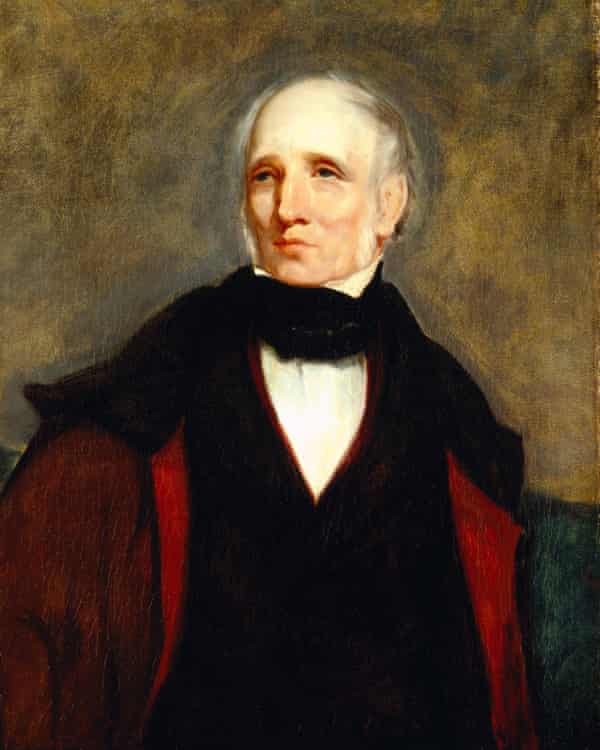
She Dwelt
among the Untrodden Ways
William Wordsworth
William words worth was a major English Romantic poet who has contributed to Romanticism in English literature. 'She Dwelt among the Untrodden Ways' was written in 1798. This poem is Wordsworth’s best-known work from a series of five texts that form his “Lucy” series. In this series, Wordsworth examines an idealized and unrequited love for Lucy, a girl who has died young. 'She Dwelt among the Untrodden Ways' is written about the death of his beloved whose name was 'Lucy'. In the poem, he has expressed his mourning tone as an elegy.
In the poem, the poet describes a graveyard where an amid is kept. She is buried in an area where people rarely stepped in i.e untrodden area beside the Dove River. It is kept beside the springs of the Dove River. There is nobody praising her beauty and virtue in the world. There may be very few or none to love and respect her. Above her grave, there are grown violets and mossy on the stone which is half-hidden. She is really like a shining star in the sky. It is unknown to that entire where has buried, only a few understand about the death of Lucy. She is in the grave. Her death makes difference in the life of the poet.
In the poem, a village girl Lucy had died. She was not popular and liked or loved by many people. But she was like the shingling star for the poet. She was the only lady to whom the poet used to love. Her death makes a great difference in the poet's life. From the final part of the poem, we understand the theme of the poem. So the poem tries to present the mourning tone of sadness in the poem, towards the death of a girl.
Friday, January 7, 2022
A day by Emily Dickinson poem summary
/GettyImages-171135660-00819da09c0b445abb6619d289351c55.jpg)
Unit Two
Literature part (Poems)
A Day
Emily Dickinson
Emily Dickinson is the most eminent American poet. She was born in 1930 and died in 1886. She was not publicly recognized during her lifetime. However, she has been steadily gaining popularity through her posthumously published. She mostly writes about life and death. The poem 'A Day' is written about the beautiful day that leads innocent children from innocence to experience. In the poem, we can see the surface and deep meanings. There are many images and symbols are used to bring effects in the poem.
In the first stanza, the poet describes the beautiful scene of the rising sun. The scene of the rising sun is exciting and romantic, especially for the children. In the morning while the sun rises upon the earth it gives a really romantic scene. The rays of the sun look like ribbons. The golden light of the sun at first touches the top of steeples. The steeples are covered with a deep violet color like amethyst. The news of sunrise spreads like squirrels’ run. It means the light of the sun gently touches all the corners of the earth.
In the second stanza, we can see the beautiful description of morning where mountains remove their bonnets and look beautiful. Then the bird bobolink starts to sing-song in the happiness of the day. This makes a child aware of the day.
In the third stanza, the speaker seems unknown to the scene of sunset. But the speaker describes purple color steps where the children with golden color are climbing all the while. It is not clear where the children are going. They might be returning to their home from their school or somewhere else.
In the fourth stanza, these children climb till they reach the other side. It means their journey is not stopped until they reach their destination. On the way, they might visit a dominie (a religious person, clergyman). That dominie stops them with the evening bars. People can't go to heaven until God calls them. He puts an evening bar and leads the flock (a church congregation by the pastor) away. It means people die.
In the beginning part of two stanzas, the speaker is confident and romantic about the beauty of the sun but in the last two stanzas, the speaker is more serious and uncertain about the sunset. In the poem, the sunrise can be taken as the birth of a person, the innocent state of the people, and the happy mood of the speaker. But in the later part, the speaker is a more uncertain, sad, and experienced life and a bit religious. In the final part, takes the poet refers to the death of people. The poem is entirely based on the theme of life and death. The Dominie is presented as a symbol of the god. It is believed that people reach to the god after death. So the final stanza refers to the death of people. In the last line 'Lead the flock away' means the god take the flocks (group of people) away from the earth to heaven.
Wednesday, January 5, 2022
No Second Troy By W.B. Yeats summary and analysis

No Second Troy
William Butler Yeats
William Butler Yeats is a famous Irish poet, dramatist and one
of the pioneers of the literary world in the twentieth century. He has made
great contribution both in Irish and English literature. In 1923, Yeats was
awarded the novel Prize in literature making him the first Irishman to be
honored with the award. He loved an Irish revolutionary woman Maud Gonne but
she rejects his proposal of marriage. The poem was written on the time when
Maud Gonne had rejected him and she was participating in the revolution between
Ireland and England. She was so
beautiful and courageous woman of a high-class family.
The poem No Second Troy is referring to the history of the Trojan
War. In ancient Greek mythology, a place called Troy was devastated (ruined) by
the Greeks in the Trojan War after Helen, the wife of King Menelaus (Sparta,
Greek) ran away with Paris, the prince of Troy. Apparently, it was Helen, the
most beautiful woman in Greece, who was blamed to be responsible for the
destruction of Troy. Similarly, the poet compares the event of history with the revolution
of the Irish. There was a conflict between England and Ireland. He keeps Maud Gonne
in the place of Helen in the poem.
In the beginning part of the poem, the poet asks a rhetorical
question that he doesn't like to blame her (Maud Gonne) for sending his life
into misery. It means Yeats is referring to Maud Gonne who has sent his life
into misery. He explains that he is not worried about the situation when his love
was rejected by her. He is satirically accusing her of praising the innocent
people into war. He complains about her activities like gathering the ignorant
innocent Irish men for the revolution and praising the people living in a small
street (living in a village) to fight against the great (modern town) Britain.
This way of war is going to give any sense of victory, he questions. Do these
Irish people have courage which is equal to their desire to fight against Britain (England)? The
poet doesn't see anything which gives calm in her mind.
He describes her as very beautiful as a tightened Bow. It means she
is strong enough for the war and revolution and there is nothing that could
calm or kind her. The poet explains that what his beloved doing is not natural
and suitable for her age. She is the people of higher class and becoming alone
in the mass of people. There is nobody to show her sympathy. Her husband MacBride
had already died. The poet wonders why she is so fierce and leading the
revolution and what could she have done, what could she be, and what she really
trying to do. The poet is challenging his beloved not to be like Helen cause
of the destruction of troy. He asks himself if Maud Gonne was really trying to destroy
Ireland as the troy.
Sunday, January 2, 2022
mending wall by Robert frost summary and analysis class


Mending Wall
Robert
Frost
Robert Lee Frost
was born on March 26 1874 in San Francisco, California. He was a noted and
critically respected American poet of the 20th century. The majority of his
word had been published in England as well as America. He received his first
Pulitzer Prize in 1924 for "New Hampshire". In 1960, he received the
United States Congressional Gold Medal for " in recognition of his
poetry" which enabled the culture of the United States and the Philosophy of the
world. He died in 1963 in Boston. "Mending Wall was published in 1914,
it was taken from his poetry collection 'North of Boston'. The poem can be
regarded as a dramatic lyric. In England, there is the tradition of keeping the walls of stones
between the neighbors. They believed that good fences make good neighbors. In
the poem, the writer is against the tradition of keeping the wall. But his neighbor is
in support kipping wall.
The poet wonders about the condition of
walls; why some part of the wall is needed to repair every year. How do the
top stones of the wall fall on the ground? Sometimes the hunters may damage the
wall for searching the rabbits or the wall may be damaged by the harass weather.
But the speaker remembers repairing the damaged wall immediately. The speaker
doesn't know who would damage the wall and why the boulders fall and how the
gap is created in the wall.
His neighbor lives beyond the hill
and comes to repair the wall each spring. They walk to both sides of the wall
and repair them every year. Some fallen stones are flat as loaves and some are
round as a ball. Their hands become dirty as they are playing outdoor games. According
to the speaker, they don't need any wall between them because the speaker has an orchard and his neighbor has a pine field. Mockingly he says that his apple tree
can't go across his field and eat the cones of his pine. They don't have any
cows which cross their wall. But his neighbor only says "Good fences make
good neighbors".
As a routine, the speaker is walling
in and walling out each year. He doesn't love walls but repairing walls frequently. The speaker tries his best to abolish the wall between them. He gives
many examples to change the attitude of his neighbor, but can't change his
mind. In addition, the speaker says that there is a force that does not love a
wall. That is to say, it wants to pull it down. The poet proposes that elves
could be making gaps in the wall which doesn't love the walls. The speaker tries
to convince his neighbor to remove the wall between them but he remains still
like an old stone and doesn't change his mind as his father said, "Good
fences make good neighbor".
Theme
of the poem
In the poem, the writer tries to make
something change in the old tradition. The wall is presented as a barrier between
the people. On the basis of caste, culture, religion, color, and economic
condition there is a kind of wall created between the people. The writer wants
to abolish the discrimination created between people but his neighbor remains against his thought. He doesn't
want to make changes to his old tradition. He doesn't want to be changed with
the time of the day.